


A few weeks ago someone, once again, used love when they meant goodwill.
This recent instance was at a “circling” event. Circling is a “social container” where people are welcomed to talk frankly about emotions and other things alive in them at the moment they arise. The vibe was grim, and I was commenting that there was no love in the room. Most of the whole room of 20 people seemed very surprised and somewhat insulted that I said that, and one even asked me incredulously “really, you don’t sense any love in the room?” Like I said, the vibe was grim, but to the extent there was any positive feeling, it was metta, not love.
I am not in the metta-heavy culture much any more, but this was always a pet peeve of mine (also hippies telling me they love me when they don’t know me from Adam!)
I’m tired of explaining this so let’s put it to bed once and for all:
Metta is Goodwill.
It is Not Love

You can call Metta “loving kindness” if you want, fine.
But remember that metta is a flavor of kindness. It is reminiscent of love in some ways, but it is not love.
Just like you could call Love “benificent passion” or something like that.
But never forget that love is a passion, not benificence itself.
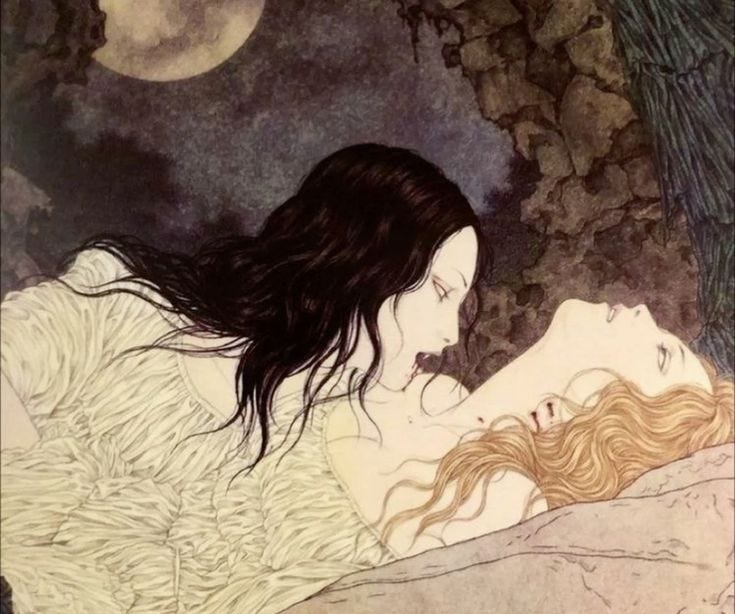
Love is not equanimous (even-headed)
See for example, positive illusion, and consider taking wild risks for love. Consider that the beloved becomes something of so much value that it is sublime and unweighable. Consider that if you love something, you rate it as much more valuable than everyone else would. Is this mentality evenheaded?
Love is not impartial
Love is preferential and even allegiant. Partiality is part of the pleasure of course, giving you dopamine and a certain “glitter”. These require irregular intervals, eg you can’t love everything and still get the love feeling) that can’t be maintained for all things.
Love is choosing, and it is all ABOUT choosing in that we want to choose and be chosen in return.
Love is about specialness
We crave specialness, special moments, special connections. Metta is not about creating something special nor is it in service of something special over the typical. Love notices the rare. It even applies the rare! (see again positive illusion)
I will be so bold as to suggest that a life with only metta and no love, would be devoid of the feeling of specialness. (I won’t die on this hill but I’m curious to hear opinions)
Love is galvanizing
When something you love seems in danger, you are driven to fight. You are driven to create, move mountains, for the beloved. Metta is peaceful
Metta is about self-improvement and transcending
Metta is a practice for cultivating a way of being that circumvents pain and suffering, and modelling that way of being so others can uptake the practice and also circumvent pain and suffering. It is altrusitic and has a big picture.
Love can lead to pain and suffering (and a philosophy around love believes that’s okay).
Love wants to entangle not transcend, although the conceptiual hope to transcend might be there, in practice love really just entangles. Love paradoxically also craves to stay with the thing you love. Metta is about freedom and transcending, love is attachment.
Love is paradoxical, mysterious, and erotic.
Metta is clean and consistent. Love is murkier and can be confusing and leads us to act in paradoxical ways.
I personally believe that the erotic exists in the space between concepts. In ambiguity. In paradox. In conflict and difference. Metta does not go there.
Love is about Desire
Metta practices acceptance of what is. Love desires outcomes in favor of the beloved and our relationship to it. Love prioritizes the beleoved so of course it wishes for blessings upon the beloved, even at some expense of others it would choose to benefit the beloved. The extent of the expense one would accept for their beloved is based on the extent of the love.
Love takes more courage
Metta takes some courage too. It takes courage to wish your enemy well and realize they are a full being like you and not all bad.
But loving takes much more courage because you risk future pain from the attachment. You do attach. And if the loved object or person dies, leaves, or is destroyed, you will feel pain.
Okay the feeling from Metta is partway to love, I admit
I think in practicing metta, one IS calling up PART of the flavor profile (feelings profile) of love. Eg, the feeling of metta can have its place in a certain type of love.
On the spectrum from sentimental love to romantic love
The feeling of metta is tacked more strongly onto the sentimental side
Note that I claim this is true of the feeling you get when practicing metta. NOT the practice of metta, which is really not attached to love at all I think. That practice necessitates tryng on a framework which kills many of the the remaining bits of love. The practice of Metta calls up part of the flavor profile (feelings profile) of love though.
But not so close that either even contains the other
There is still much missing from metta practice which love has, and there is much missing from love which metta has. It’s a venn diagram and nothing more. We aren’t talking like “A poodle is a dog, but a dog is not a poodle”. This is more like comparing dogs and deer. They are both mammals I guess! Pretty different though. One is vegetarian, one is a carnivore.
Love has a streak of possessiveness
Sorry, it just does. It is related to love’s desire and also love’s protective compulsion. These are inspired by the belief that something is a rare treasure—scarce. Irreplaceable. Well, a conception of scarcity breeds grabbiness. Additionally, the love relationship stems from the concept of the self and relates to how you see the relationship between you and them, so in some sense loving something makes it “yours” in your mind. You know it better.
Love has erotic energy (Plato’s)
Plato concieved the erotic as a powerful creative drive that can elevate the soul. (This is not just sexual—even parental love and love for objects has this.) Love has this energy. It compels us to create. Metta does not. Metta is not creative.
Love is a gamble
Love means setting yourself up for a fall.
Love is a passion, and it can be full of various other passions swirling. It can coexist with other emotions and feelings, and contains them and generates them, metta does not.
Metta is like a glow from the light source inside you and everything else goes dark in comparison. You bring metta up from inside. Instead, love takes in the light from the thing, and many other things, and different emotions can snuff in and out throughout the sensation of loving and reckoning with all these things.
Goodwill or loving kindness is something like an emotion itself, something like peacefulness. Any emotion that contradicts peace can not coexist with metta. But love exists with or without peace!
Love is very emotional in these ways:
Thankful (for a particualr thing)
Touched (by the particular thing)
Pity (for a particualr thing)
Fascination, the particular thing is fascinating to you
Awe/wonder
Desire
Stunned (eg by beauty)
Shocked surprised
Stimulated
Spellbound (implies bound by something acutely, must be temporary because can’t go through life spellbound)
Perhaps metta can coexist with these too, but they are definitely not contained in metta practice, and I believe when the emotions are added in to metta, the equanimity is being degraded and traded off against. So maybe metta is a spectrum and the truest metta does not have these. I do think Metta Pracice is trying to remove passions.
Maybe a more flexible metta can have more emotion. The halfheartedness and tempering is not like love though, because love in its truest form likes feeling passions. In fact love even likes to generate more passions, eg “That person was rude to my girlfriend! *feels passion of anger*”
This is very in line with soul vs spirit. Soul get enmeshed and entangled and likes to dive deep. Spirit likes to ascend, transcend even.
The truest love is very enmeshed and entangled. The truest metta take a bird’s eye view.
Love also experiences frustration, indeed love often stems from our deepest frustrations, which become something our soul calls out for, something it needs satisfied. We often love because of such soulful desires.
Love has a narrowed focal area
Metta has either a broad focal area or no focal area (and you just sense the glow). I can’t easily figure out which it is, to be honest, and I don’t care to.
Love reckons with your own needs (hence desire)
Whether the lover does this well or poorly is moot. Metta does not reckon with the needs of the self at all.
Receiving Love changes the receiver in a different way than receiving metta
Are you transformed and liberated by recieving metta? I am not. Maybe I just feel respected and a bit relieved, and it puts me into a positive mindset. Even if I were given a steady stream of metta for months, I don’t think this would transform and heal me in the way that being chosen, being loved is.
I must say that if someone decided to follow you in particular around for months and laser metta at you the whole time, they would probably actually love you though! Ha. Only love compels a person to act as focused as that.
Love wants to be real in the world and relate itself to what is real
Metta is not real in the world, or related to what is going on in the world at all, it is a break from the world
Love requires knowledge of someone
In love you create what you want, and bring a person nearer for yourself.
Metta does not have an intent to change the state of things
But Love also requires imagination
“The tragic freedom implied by love is this: that we all have an indefinitely extended capacity to imagine the being of others. Tragic, because there is no prefabricated harmony, and others are, to an extent we never cease discovering, different from ourselves… Freedom is exercised in the confrontation by each other, in the context of an infinitely extensible work of imaginative understanding, of two irreducibly dissimilar individuals. Love is the imaginative recognition of, that is respect for, this otherness.”
This quote is basically saying that people are so amazing yet unknowable and different from ourselves that the only way we can really reckon with another is to imagine things about them, make meaning and understanding and extrapolation out of what little we know. In that sense, love is free to create its own forms, but only because of the tragic unknowableness of the other.
Love reckons with separateness
The lover feels the absence of the beloved.
“My dearest creature, please forgive any hurt from my letter. I do love you, and that is the main point. And if I am alarmed at what seemed your vicious aspect you must appreciate that I have had cause for the alarm. Time cures these things and time is bringing us closer together. It seems absurd in a way how difficult it all is — maybe difficulty is of the essence. It is like a relationship between two railway engines. It would be nice to be together in one shed. But we seem to spend the time rushing about on various tracks trying to meet. Sometimes it looks as if we are going to have a head-on collision. Then one of us goes roaring away down a side track wildly whistling. Then when it seems we might come together the tracks suddenly divide…
Yes, I do love you, do believe it.”
Love comes from frustration
“All love stories are frustration stories… To fall in love is to be reminded of a frustration that you didn’t know you had (of one’s formative frustrations, and of one’s attempted self-cures for them); you wanted someone, you felt deprived of something, and then it seems to be there. And what is renewed in that experience is an intensity of frustration, and an intensity of satisfaction. It is as if, oddly, you were waiting for someone but you didn’t know who they were until they arrived. Whether or not you were aware that there was something missing in your life, you will be when you meet the person you want. What psychoanalysis will add to this love story is that the person you fall in love with really is the man or woman of your dreams; that you have dreamed them up before you met them; not out of nothing — nothing comes of nothing — but out of prior experience, both real and wished for. You recognize them with such certainty because you already, in a certain sense, know them; and because you have quite literally been expecting them, you feel as though you have known them for ever, and yet, at the same time, they are quite foreign to you. They are familiar foreign bodies.”
“However much you have been wanting and hoping and dreaming of meeting the person of your dreams, it is only when you meet them that you will start missing them. It seems that the presence of an object is required to make its absence felt (or to make the absence of something felt). A kind of longing may have preceded their arrival, but you have to meet in order to feel the full force of your frustration in their absence…
Falling in love, finding your passion, are attempts to locate, to picture, to represent what you unconsciously feel frustrated about, and by.”
Love is related to identity
“A person’s identity is like a pattern drawn on a tightly stretched parchment. Touch just one part of it, just one allegiance, and the whole person will react, the whole drum will sound”
Amin Maalouf
Love is related to the unconscious
We can choose to consciously love someone to some extent. But there will always be an element of the unconscious. Some level we con’t reach unless some part of our psyche feels a “click”. What makes someone love? To some extent it is consciously chosen, but to another extent it is unconscious.
Meanwhile Metta is consciously performed.
P.S. I’m not the only one who thinks this. See? Even big fans of metta agree with me! Now please stop calling metta “love.”
Kthxbyeee!
P.P.S. A bit on Jhanas while I have you here (I want to hear your thoughts)
I have my doubts that they really matter and are soulful anywhere near the amount romantic love matters and is soulful:
Jhāna’s whole value is that it’s self-generated. It’s available on demand, without depending on another person or on circumstance. Love’s value is the opposite. It depends on another, a rare object or a free will that could refuse you. The risk and the meaning come together.
Its traditional function runs against eros. It exists partly to make you need less from the sensual world. That works as an anti-suffering technology. From a romantic standpoint, it’s training yourself out of the thing.
It has no object, story, or particular other. If “soulful” means what James Hillman meant (depth, pathos, the particular, being moved by something outside you), then jhāna is close to the anti-soul. It’s a very refined tone, not a relationship. Jhana just IS. Jhana does not entangle, nor does it get all murky and take on other tones.
Let me know what you think.